Human-in-the-loop for AI browser agents means compiling a task into a deterministic skill, pausing the run at declared checkpoints, and letting a person authorize the sensitive step — then resuming the replay with zero LLM calls on the replayed path. You do not need a human on every step. You need one on the four or five steps that touch money, identity, or irreversible state.
The Browserbase human-in-the-loop agent template is a useful reference shape for this: it pauses for user input mid-task, then resumes autonomously with Stagehand and Browserbase. That pause-resume contract is the whole idea. Everything below is about making it cheap, auditable, and hard to get wrong.
Key takeaways
- HITL is an architecture decision, not a UI feature. Put the pause point in the compiled skill, not in the prompt.
- Deterministic replay is what makes handoffs cheap: a human decision becomes an input parameter, not a fresh reasoning pass.
- Authorize at the action level — login, payment, delete — not at the task level.
- Record the session. A recording is the only thing that makes an exception reproducible.
- Start with two gates. Add more only after you have watched real runs fail.
Why do production AI browser agents need human-in-the-loop in 2026?
Production agents need HITL because the failure modes that matter are authorization failures, not reasoning failures. An agent that misreads a page wastes a few cents. An agent that submits a payment, deletes a record, or accepts terms of service on a user's behalf creates liability that no retry logic can undo.
Human oversight in browser automation is fundamentally about accountability. Your agent cannot consent to a contract, cannot approve spend, and cannot decide that a destructive action is fine. Those are human acts, and the system has to have a place to put them.
The second reason is state. Logins, MFA prompts, and one-time codes are the most common place a run stalls. If your only recovery path is "restart the run," you burn tokens and time on every stall. If your recovery path is "hand the live session to the user for twenty seconds," you don't.
How do you architect human authorization into an interactive agent workflow?
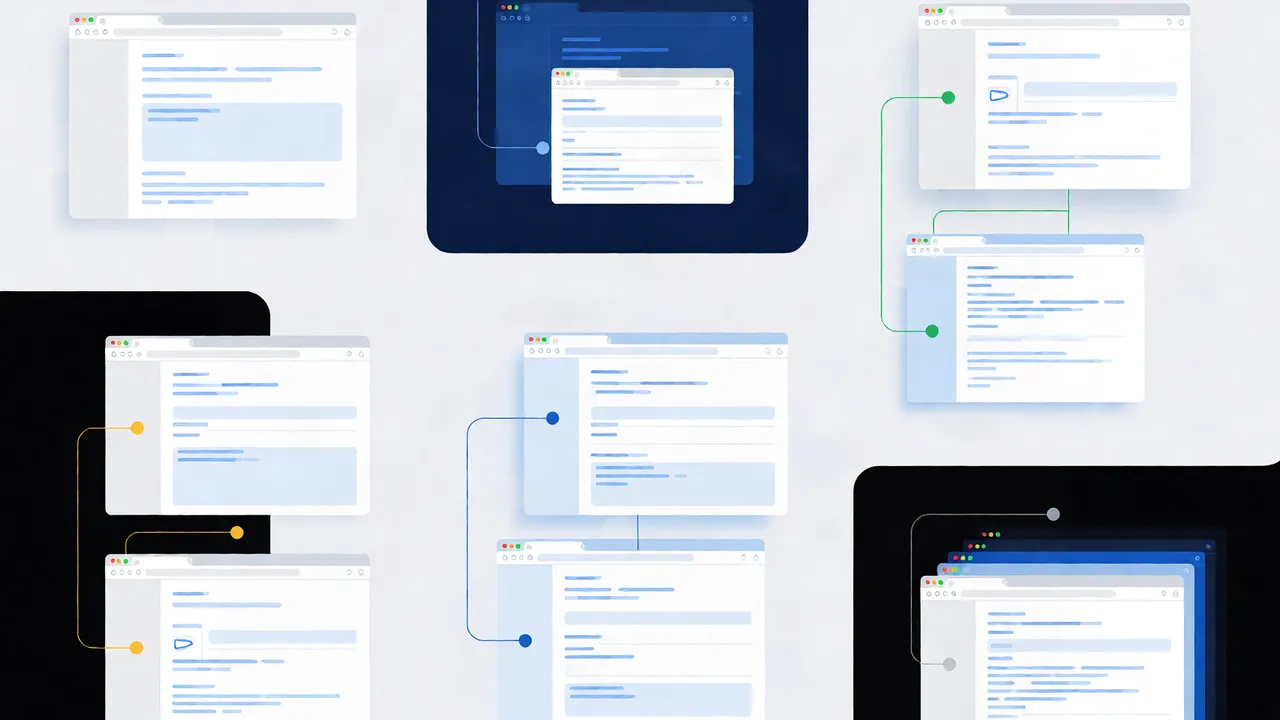
Architect for intervention by declaring gates in the skill definition, not by hoping the model asks for help. A gate is a named checkpoint with a trigger condition, an approver, and a defined resume behavior. The agent reaches the gate, the run suspends, the human acts, and the run continues from that exact point.
Here is the gate taxonomy I keep coming back to:
| Gate | Trigger | Approver | What happens on approval |
|---|---|---|---|
| Auth | No valid session cookie | End user | User types credentials into the live session; the agent never sees them |
| Payment | Amount above threshold, or new payee | End user | Agent submits with a signed approval token |
| Destructive | Selector matches a delete/cancel pattern | Operator | Replay continues from the gate |
| Ambiguous | Two or more candidate elements match | Operator | Operator picks; the choice is written back into the skill |
The important design rule: the gate is part of the compiled artifact. If the pause lives in the prompt, the model will sometimes skip it. If it lives in the skill, it fires every time, deterministically.
What role does deterministic replay play in a human handoff?
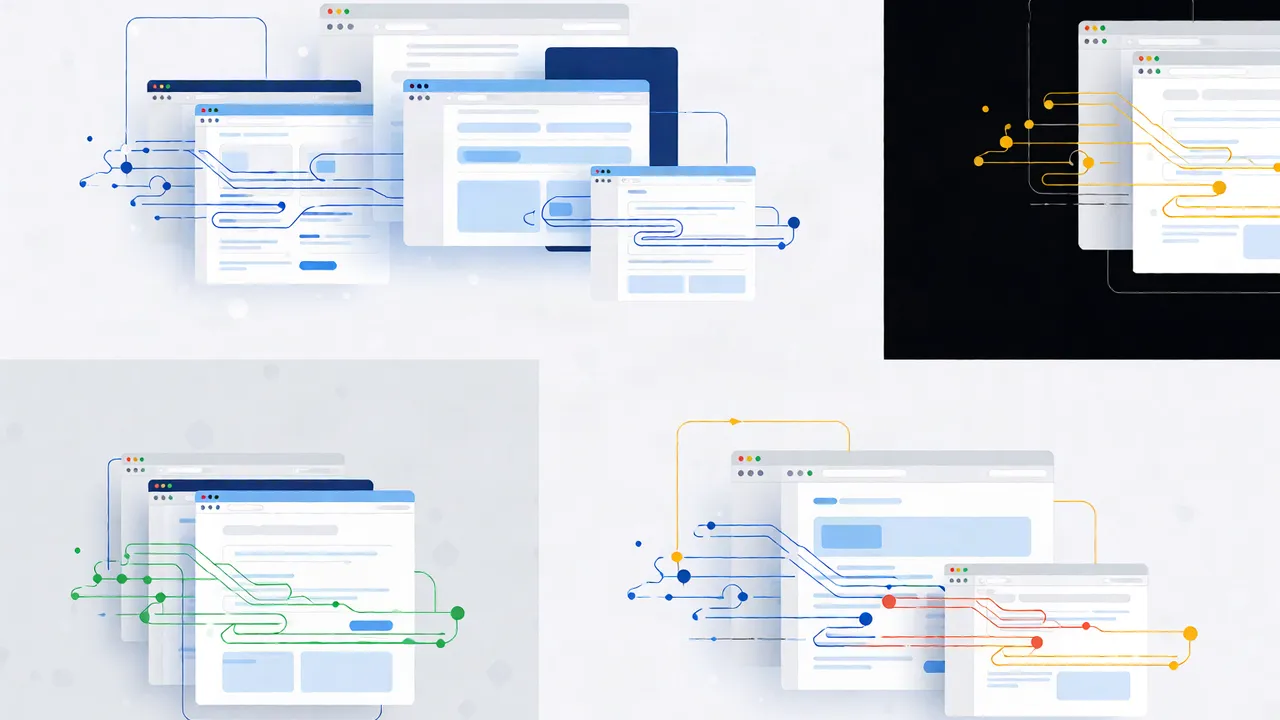
Deterministic replay is what separates a supervised agent from a babysat one. In a replay model, you compile a run once — the model figures out the steps — and then replay those steps without any LLM calls. When a human approves a gate, their decision becomes an input parameter to the replay, not a new reasoning pass.
That has two consequences. First, cost: a replay with a human gate is still a zero-LLM-call replay. You paid for the model once, at compile time. Second, reliability: the same run produces the same steps, so an approval you gave yesterday still means something today.
We wrote the arithmetic up separately in how deterministic replay and caching cut agent costs, but the mechanism is simple. The human decision is data. Data replays. Reasoning doesn't.
How do you implement AI agent user authorization?
Implement authorization with a policy object, an approval request the agent can issue, and a resume call that carries a token. The agent should never hold the credential and never hold the approval — it should hold a reference to both.
Illustrative shapes, not a specific SDK:
// Gates declared in the skill, checked by the runtime.
const policy = {
 gates: [
 { id: "auth", when: "no_valid_session", approver: "end_user" },
 { id: "payment", when: "amount > 0", approver: "end_user" },
 { id: "destructive", when: "selector.matches(DELETE)", approver: "operator" },
 ],
};
When the runtime hits a gate, it exposes an approval request over your tool interface. An MCP-style call looks like this:
{
 "tool": "request_human_approval",
 "input": {
 "run_id": "run_8f21",
 "gate_id": "payment",
 "summary": "Pay invoice #4471 — $2,480.00 to Acme Utilities",
 "expires_in_s": 900
 }
}
Resuming is a single call. Note the remember field — that is how human feedback gets folded back into the skill so the same gate doesn't ask twice:
await run.resume({
 gate: "payment",
 approval_token: token,
 remember: "auto_approve_under_5000_same_payee",
});
Secure AI agent control comes down to three properties: the agent never sees raw credentials, approvals are scoped and expiring, and every approval is attributable to a person. If you cannot answer "who approved this and when," you do not have control — you have a log file and a hope. Our security checklist for AI agents in browser automation covers the surrounding surface.
How do you manage AI agent exceptions without losing the run?
Manage exceptions by classifying them before you handle them. Retryable exceptions (a slow response, a transient 503) should never reach a human. Recoverable-with-input exceptions (MFA, an unexpected dialog, an ambiguous selector) should suspend the run and ask. Terminal exceptions (the account is locked, the item is gone) should stop and report.
The mistake I see most often is treating all three the same way — usually by retrying everything, which turns a two-second MFA prompt into a five-minute loop. Advanced error handling for resilient AI browser agents goes deeper on the retryable tier.
The other half is feedback. When an operator resolves an ambiguous state by hand, that choice should be recorded into the skill so the next run resolves it automatically. Human feedback on AI agents is only worth collecting if it changes future runs.
How do you quantify the cost-benefit of HITL?
Quantify it by counting LLM calls, not by counting human minutes. A human pause costs wall-clock time; a re-reasoned step costs tokens on every single run, forever. Those are different kinds of expensive, and the second one compounds.
Illustrative arithmetic for a 15-step run at roughly two model calls per step:
| Scenario | LLM calls | Human pauses | Notes |
|---|---|---|---|
| No HITL, agent stalls at login | 30 + restart cost | 0 | Stall usually means re-running from step 1 |
| HITL, first run | ~30 | 2 | Compile-time reasoning, two gates |
| HITL, replay with standing approval | 0 | 0 | Decision is an input parameter |
| HITL, replay with a gate that fires | 0 | 1 | Still zero LLM calls |
The numbers above are a worked example, not a benchmark — plug in your own step count and model pricing. The structural point holds regardless: gates add latency, replay removes cost. If your runs are one-off and never repeat, HITL buys you safety but not savings. If your runs repeat, the savings are the whole business case.
What should live view and session recordings capture?
Live view and recordings should capture enough to reconstruct the decision, and nothing that reconstructs the credential. The human needs to see the page; the auditor needs to see the choice.
A minimal capture set:
- A DOM snapshot and screenshot at the moment the gate fires.
- The selector or element that matched, and the runner-up candidates.
- The approval decision, the approver identity, and the timestamp.
- The request and response for the authorized action, with credentials and card numbers redacted.
- The resumed step index, so you can tell whether replay continued cleanly.
One honest trade-off: headless versus real logged-in browsers matters here. A headless session is easier to record and cheaper to run, but when the gate is "log in as this specific person," a real browser session with a visible live view is usually the only thing that works. Don't fight that — route the auth gate to the real-browser path and keep everything else headless.
When should you automate fully, and when should you keep a human in the loop?
Automate fully when the action is read-only, reversible, and cheap to repeat. Keep a human when the action is irreversible, involves money or identity, or happens on a site you have not run against before.
| Situation | Automate fully | Keep a human |
|---|---|---|
| Read-only internal data pulls | Yes | No |
| First login to a user's own account | No | Yes, then standing approval |
| Payments or purchases | No | Yes, every time |
| Stable DOM, high volume | Yes | No |
| New site, unstable DOM | No | Yes for the first few runs |
| Regulated or audited actions | No | Yes, with logged approval |
The rule of thumb: gate on consequence, not on confidence. A confident agent making an irreversible change is exactly the case where you want a person. Building supervised AI agents is not about lowering autonomy everywhere — it's about putting the one brake where the cliff is.
If you're building this now, Twin Browser is where we work on the compile-replay model and the gate runtime around it. Worth a look if the pause-resume contract above is the shape you're missing.
FAQ
What is human-in-the-loop for AI browser agents?
It is a run architecture where the agent suspends at declared checkpoints and a person authorizes the sensitive step before the run resumes. The human decision is stored as an input to the run, so a replay does not need to re-reason about it.
Do I need a human in the loop for every agent action?
No, and adding gates everywhere is a common way to make an agent useless. Gate on consequence: logins, payments, destructive actions, and ambiguous states. Read-only and reversible steps should run unattended.
How does deterministic replay make human intervention cheaper?
Because the human's approval becomes a parameter to a replayed step rather than a new model call. The compile pass pays for reasoning once; every subsequent replay, with or without a gate, runs at zero LLM calls.
How do I handle MFA and login prompts in an agent run?
Treat them as an auth gate. Suspend the run, hand the live session to the user so they type the code themselves, and resume once the session is valid. The agent should hold a session reference, never the credential.
What should I log for human oversight of browser automation?
The gate trigger, a DOM snapshot and screenshot, the matched selector, the approver identity and timestamp, and the redacted request for the authorized action. That set is enough to reconstruct any decision without storing secrets.